Quotes about Writing / Songwriting
/ Creating
"Bruce Springsteen’s first two #1 hits were “Blinded By The Light” and “Spirits In The Night,” both on his debut recording, Greetings from Asbury Park, N.J. But it was Manfred Mann’s recording of them that landed in the charts, not Springsteen’s. As a matter of fact, when Springsteen first handed the album to Columbia records, those two songs weren’t even recorded or written! Upon first listen, Clive Davis told Springsteen there was nothing he could push on the radio and he needed to write some more songs. Reluctantly or not, Springsteen listened to Davis and wrote his first two number ones (albeit recorded by another artist). Manfred Mann once told an interviewer that he enjoyed restructuring and “playing” with Springsteen’s early songs. When asked why he didn’t continue to revamp more in lieu of the successes of the first two, Mann replied that Springsteen had gotten so good at songwriting he didn’t feel he could improve them.
"The point is, while Springsteen’s first and second releases were critically acclaimed by folks who identified his raw brilliance and unusual songwriting approach, they didn’t sell well. It wasn’t until Springsteen’s third release, Born To Run, that he refined his craft to the point where the masses began to respond. It’s also important to note that Springsteen was willing to accept criticism and work on his songwriting at the behest of the record label head." — Johnny Dwinell, "Seven things to consider when shopping recording studios," Disc Makers Blog, Oct 16, 2017
"At this point, songwriting is the easiest thing. I wrote 'Easy Target,' a song on my new album, while I was painting. It took eight minutes. The melody came right along with the words. I didn't even have a guitar. I just sang it into my phone." — John Mellencamp, "Upfront / What I Know Now," AARP The Magazine, June/July 2017
"I was young, but I knew what I was doing the night I wrote 'Jack & Diane.' Everyone knows that song. Everybody—city, country, gravel road, igloo—it's their song. That's magic. I play it every night." — John Mellencamp, "Upfront / What I Know Now," AARP The Magazine, June/July 2017
"I'll never fully understand why I wrote my first song 10 years ago. I woke up from an operation with music in my head. I finally stopped worrying about it and just started writing." — Mary Steenbergen, "Upfront / Mary's Playing Our Song," AARP The Magazine, June/July 2017
“I never thought I could write a book. Like quilt-making, I broke the story into blocks and then pieced them together.” — Ann Zemke
"The only songs I have gotten cut were the ones I wrote for myself to sing, and I didn't even think about the radio. Or think about other artists doing them. So I just quit wasting my time thinking about it. Because the best work always comes from writing for yourself and writing stuff you know about, rather than, 'What would George Jones like?' or 'What would George Strait like?'" — Guy Clark, contributed by Ed Skibbe 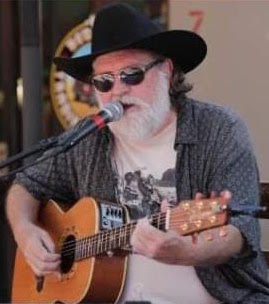
"Here’s what I love about Dylan – he was exactly as you’d expect he would be. He wouldn’t come to the rehearsal. He didn’t want to take a picture with me; usually all the talent is dying to take a picture with me and Michelle before the show, but he didn’t show up to that. He played The Times They Are a-Changin’. A beautiful rendition. The guy is so steeped in this stuff he can come up with a new arrangement and the song sounds completely different. Finishes the song, steps off the stage ... comes up, shakes my hand, sort of tips his head, gives me just a little grin and then leaves. That was our only interaction with him. And I thought, That’s how you want Bob Dylan, right? You don’t want him to be cheesin’ and grinnin’ with you. You want him to be a little skeptical about the enterprise." — President Barack Obama
"If a person has never given writing a try, they assume that a brilliant idea is hard to come by. But really, even if it takes some digging, ideas are out there. Just open your eyes and look at the world. Writing the ideas down, it turns out, is the real trick." — Ann Patchett
"Writing is a patient and slow process that requires total concentration but also a relaxed state of mind so ideas and images can flow with an almost organic energy. If I am trying to hard, the muse of inspiration backs off. When I feel that the writing is not coming easily, that the characters are not talking to me or that the story is not unfolding gracefully, I start playing with my beads [making bead necklaces], which takes my mind off the book. By the time I finish the piece I'm working on, I am usually refreshed and ready to go back to my writing." — Isabel Allende
"A not very well known fact on Boulez' influence on Top 40 (which he probably didn't know either.) 'It stems from a 1970 party that Simon hosted with his wife, Peggy Harper. Simon's friend, the composer Stanley Silverman, brought along Pierre Boulez, and when he made his exit, Boulez called Simon 'Al' and his wife 'Betty.' Boulez is French, and he wasn't being rude - it was just his interpretation of what he heard - Paul=Al Peggy=Betty.'" — Rob Schwimmer
"Song ideas come to me as I read, walk or just recall my experiences of love, loss, joy, heartache or humor. When faced with a touch challenge, I simply imagine I'm leaping from a perfectly well-functioning plane into the unknown." — Paula Boggs, quoted in "Personal Best / My Passion / Wild Blues Yonder," AARP The Magazine, October-November 2015
"Since most of [my] lyrics … were arrived at by fitting words mosaically to music already composed, any resemblance to actual poetry, living or dead, is highly improbable." — Ira Gershwin, contributed by Dan "Doc" Wilson
"You're never going to kill storytelling because it's built into the human plan. We come with it." — Margaret Atwood
"Fill your paper with the breathings of your heart." — Wordsworth
"Brevity is the sister of talent." — Anton Chekhov, Facebook meme
"If I don’t write, I become restless and ill-tempered. I become dissatisfied. My reaction to not writing is both physical and emotional. I am incomplete without m work." — Terry Brooks
"Works of art make rules; rules do not make works of art." — Claude Debussy
"To achieve great things, two things are needed; a plan, and not quite enough time." — Leonard Bernstein
"I am hitting my head against the walls, but the walls are giving way." — Gustav Mahler
"Without craftsmanship, inspiration is a mere reed shaken in the wind." — Johannes Brahms
"There was no one near to confuse me, so I was forced to become original." — Joseph Haydn
"As a musician I tell you that if you were to suppress adultery, fanaticism, crime, evil, the supernatural, there would no longer be the means for writing one note." — Georges Bizet
"A creative artist works on his next composition because he was not satisfied with his previous one." — Dmitri Shostakovich
"I may not be a first-rate composer, but I am a first-class second-rate composer." — Richard Strauss
"I can’t understand why people are frightened of new ideas. I’m frightened of the old ones." — John Cage
"I am an adventurer. I like invention, I like discovery." — Karlheinz Stockhausen
"The old idea of a composer suddenly having a terrific idea and sitting up all night to write it is nonsense. Nighttime is for sleeping." — Benjamin Britten
"Inspiration is an awakening, a quickening of all man’s faculties, and it is manifested in all high artistic achievements." — Giacomo Puccini
"Imagination creates reality." — Richard Wagner
"Poetry is language at its most distilled and most powerful." — Rita Dove, Authors Publish
"I don't think that writer's block exists really. I think that when you're trying to do something prematurely, it just won't come. Certain subjects just need time . . . . You've got to wait before you write about them." — Joyce Carol Oates
"Creativity is sacred, and it is not sacred. What we makes matter enormously, and it doesn't matter at all. We toil alone, and we are accompanied by spirits. We are terrified, and we are brave. Art is a crushing chore and a wonderful privilege. The work wants to be made, and it wants to be made through you." — unknown, contributed by J.J.
Fraser 
"Sing your song.
Dance your dance.
Own your story.
Share your message.
You might change someone's life forever.
Including yours." — Anna Taylor
"The historian will tell you what happened. The novelist will tell you what it felt like." — E. L. Doctorow,Time Magazine
"If I create from the heart, nearly everything works; if from the head, almost nothing." — Marc Chagall, contributed by J.J.
Fraser
"Artists are people driven by the tension between the desire to communicate and the desire to hide." — D. W. Winnicott
"We are, as a species, addicted to story. Even when the body goes to sleep, the mind stays up all night, telling itself stories." — Jonathan Gottschall
"Sometimes I compose on a guitar, and sometimes I compose on the piano or mandolin. Commposing on different instruments can greatly affect how the song comes out." — Bruce Huntington, quoted in "In the Crosshairs," The Western Way Winter 2015
"I have studied songs by Bob Dylan, Townes Van Zandt, Sons of the Pioneers, Tom Russell, Steve Gillette, Ian Tyson, Kris Kristofferson, and especially George Gershwin, trying to determine what it is in their music that touches people. I start with an intellectual approach, but shift gears and go to a feelings level. I don't want to copy other composers, but I do want to learn from them." — Bruce Huntington, quoted in "In the Crosshairs," The Western Way Winter 2015
"Find the best song on the charts and write five songs just like it." — Max T. Barnes
"Validation or not, I find that I have to write and compose. I have little to say in the matter." — Bruce Huntington, quoted in "In the Crosshairs," The Western Way Winter 2015
"There are those times when I come up with a song, such as "Ghost of Tombstone" or "My Master's Voice," and I know that even before the song is complete, it is special and that I got it right. There have been a couple of songs that I thought of as throw away songs, but people really like. Go figure." — Bruce Huntington, quoted in "In the Crosshairs," The Western Way Winter 2015
"A writer has to be brutally honest with him/herself. Are you using the same chord structure, the same key, the same rhythm, and the same internal construction on your songs? . . . I suggest that songwriters try and come up with a melody first and chords later. . . . don't always start high and drop down. Change it up." — Bruce Huntington, quoted in "In the Crosshairs," The Western Way Winter 2015
"I believe that songwriters need to listen to songs that are well-crafted, interesting, and energetic. I suggest that this is a good way to gain inspiration in songwriting." — Bruce Huntington, quoted in "In the Crosshairs," The Western Way Winter 2015
"My concepts of what makes a good song is that it must tell a good story, it must be relatively simple, it must not use a lot of words to tell the story and above all, it must be interesting." — Bruce Huntington, quoted in "In the Crosshairs," The Western Way Winter 2015
"A songwriter needs to have a very thick skin. Just because some people do not like your music, doesn't mean that it's not good." — Bruce Huntington, quoted in "In the Crosshairs," The Western Way Winter 2015
"One of the toughest things for me to accept is when other people make suggestions about my songs. . . . To have the attitude 'this is my baby and no one can make me change it' can be destructive to a songwriter." — Bruce Huntington, quoted in "In the Crosshairs," The Western Way Winter 2015
"We compare all new input to what we heard in the past." — Max T. Barnes
"Co-write with as many people as you can." — Max T. Barnes
"Writing songs is like an argument you can always win. You have all the time in the world." — Max T. Barnes
"We don't know what we like, but we like what we know." — Max T. Barnes
"Start with a hook." — Max T. Barnes
"You've got to move a lot of dirt to find a gold nugget." — Max T. Barnes
"Come out with your big punch in the first minute." — Max T. Barnes
"Keep a hook book." — Max T. Barnes
"Before you write a song think, 'Who's going to sing it?' Target songwriting toward a specific artist. We don't want to shoot into space." — Max T. Barnes
"Do not get stuck on a line. Let your mind rest on it. It will come to you later. Keep the pace up." — Max T. Barnes
"Applied lyric writing: every line needs to be a building block." — Max T. Barnes
"Different beats good every time." — Max T. Barnes
"Come up with a unique first line." — Max T. Barnes
"Write like you talk." — Max T. Barnes
"The singer must be a hero." — Max T. Barnes
"Write lyrics you can touch." — Max T. Barnes
"The slower your song is, the more important your lyrics are." — Max T. Barnes
"If you have a song that changes meaning, have it change twice. That gives you a lower burn rate. A burn rate is when people get tired of listening to your song." — Max T. Barnes
"The chorus ought to soar. the highest note in the song should be in the chorus." — Max T. Barnes
"Use one verse only before the chorus. No more two verses up front: you'll lose people before you get to the chorus." — Max T. Barnes
"A song must be flawless if a someone's going to wear it for the rest of their career." — Max T. Barnes
'Bring a few ideas to a co-writing session. Don't give away all your hooks." — Max T. Barnes
"Don't ever cross anyone in the music business. it's all based on relationships." — Max T. Barnes
"A hit song is a three-minute (or less), positive, up-tempo love song in the now with a good hook in the chorus, a catchy intro . . . in first person, 4/4 time, [with] a melody of an octive plus three [notes] or less." — Max T. Barnes
"I'd rather write a good song than write a hit." — Buddy Mondlock
"Once you get to the point where the song is coming together, it's time to start editing. Ask yourself
- Have I told enough?
- Did I make assumptions?
- Is this verse necessary?
- Is this the right word?
- Is this the best line? — Buddy Mondlock
"To be a good editor, you have to be able to kill your children." — unknown
"Part of your goal as a songwriter is to keep people with you. Sometimes you have to surprise them." — Buddy Mondlock
"A bridge is a departure from everything that came before or a revelation, like shining the light from a different angle." — Buddy Mondlock
"Do what feels right." — Buddy Mondlock
"The higher notes add to the excitement. There are more cycles per second in high notes." — Buddy Mondlock
"I was writing about my experience . . . but I think that why ["The Kid"] is so popular is that . . . people relate to it." — Buddy Mondlock
"To make it universal, don't just dumb it down." — Buddy Mondlock
"People need to hear that it's okay to be yourself. [The ending of "The Kid"] is a surprise — he isn't devastated." — Buddy Mondlock
"Find the detail that the listener can use to extrapolate ther rest of the story. That engages the listener." — Buddy Mondlock
"If you come up with a good metaphor or simile, don't just abandon it. Keep what works metaphorically and literally." — Buddy Mondlock
"Look for what unique to you." — Buddy Mondlock
"So a song like 'I'm a Fool to Want You' —
I know that song. I can sing that song. I've felt every word in that song. I mean, I know that song. It's like I wrote it. ...this song is not outdated. It has to do with human emotion. There's nothing contrived in these songs. There's not one false word in any of them." — Bob Dylan, quoted by Robert Love in "Bob Dylan Does the American Songbook His Way," AARP The Magazine, February/March 2015
"Photography and writing are kind of the same--the idea is to approach a subject from several angles and find one that appeals to you." — Mike Moutoux
"Writing is the painting of the voice!" — Voltaire
"You don't write because you want to say something, you write because you have something to say." — F. Scott Fitzgerald
"Your writing voice is the deepest possible reflection of who you are. The job of your voice is not to seduce or flatter or make well-shaped sentences. In your voice, your readers should be able to hear the contents of your mind, your heart, your soul." — Meg Rosoff
"True alchemists do not change lead into gold; they change the world into words." — William H. Gass, Facebook meme
"Read a thousand books and your words will flow like a river. " — Lisa See
"...when I sit on my bed now writing on my iPad, the top roll of tummy sometimes creeps over onto the screen and starts typing away. In the old days, I would have decided to start a new diet, or to end it all. Now I think, 'Who knows? Maybe it's got something interesting to add.'" — Annie Lamott
"What we see with our eyes isn't always right. Sometimes we need to see with our heart." — Karen Berg
"Fill your paper with the breathings of your heart." — William Wordsworth
"A non-writing writer is a monster courting insanity." — Franz Kafka
"I love writing. I love the swirl and swing of words as they tangle with human emotions." — James A. Michener
"Go deep." —Ken Stabler
"If a story is in you, it has got to come out." — William Faulkner
"If I do not write to empty my mind, I go mad." — George Gordon Byron
"Your intuition knows what to write, so get out of the way." — Ray Bradbury
"You have to find your own philosophy, not consciously, but unconsciously, about how human beings work." — Orson Scott Card
TOP |